
Tempeh Chips for Hormone Balance and Gut Health
The Hormone-Supportive Benefits of Soy
When it comes to women’s health, fermented soy products like tempeh can be incredibly supportive. Tempeh is made from whole soybeans that have been naturally fermented, creating a rich source of isoflavones, plant compounds that help regulate oestrogen activity in the body (Messina, 2016).
As a clinical nutritionist, I often include fermented soy in my clients’ meal plans to support hormonal balance, particularly during perimenopause and menopause. Isoflavones act as phytoestrogens, which means they can gently bind to oestrogen receptors and help stabilise hormone activity when oestrogen levels fluctuate. Studies have shown that these compounds may reduce hot flushes, support bone density, and promote heart health in post-menopausal women (Frankenfeld et al., 2014; Taku et al., 2012).
Fermented soy products like tempeh are especially beneficial because the fermentation process increases the bioavailability of isoflavones, making it easier for your body to absorb and use them (Reale et al., 2018). Fermentation also promotes beneficial bacteria, which helps to keep the gut microbiome healthy and diverse. Since the gut plays such a vital role in oestrogen metabolism through the estrobolome, maintaining a healthy gut is key to balanced hormones (Baker et al., 2017).
A Quick Snack for Busy Days
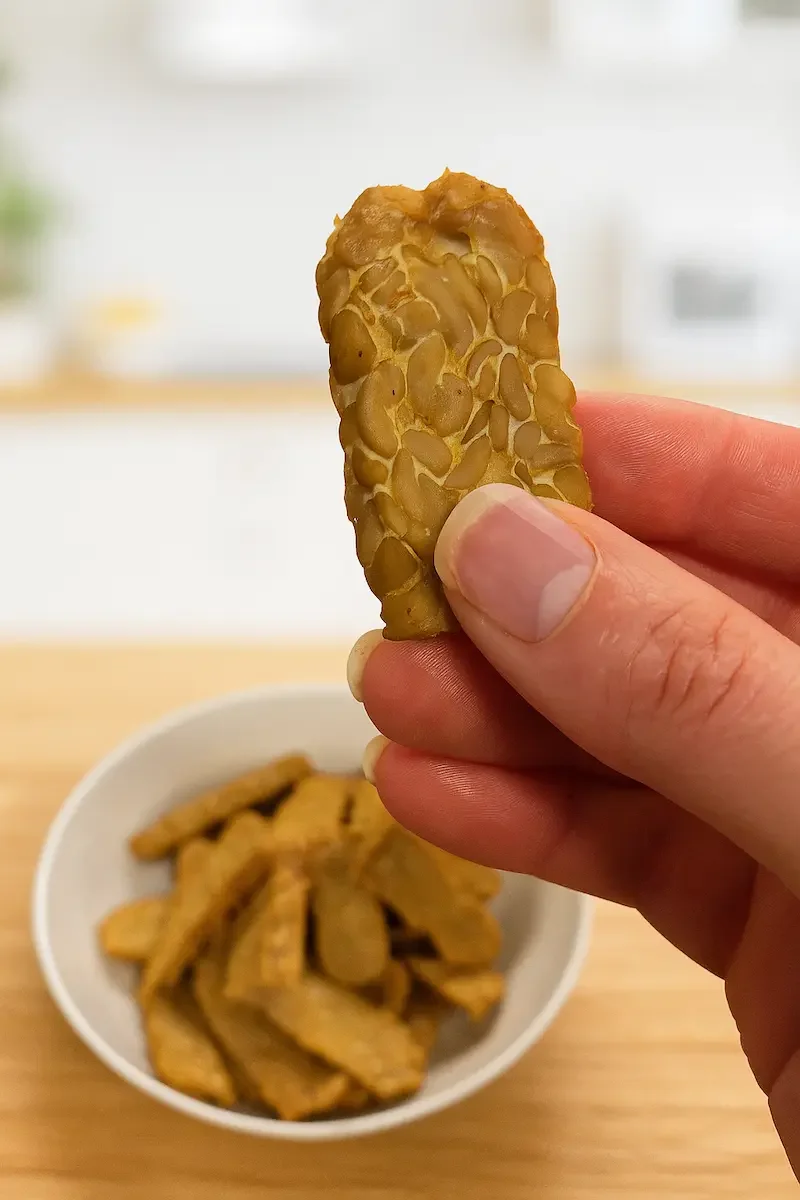
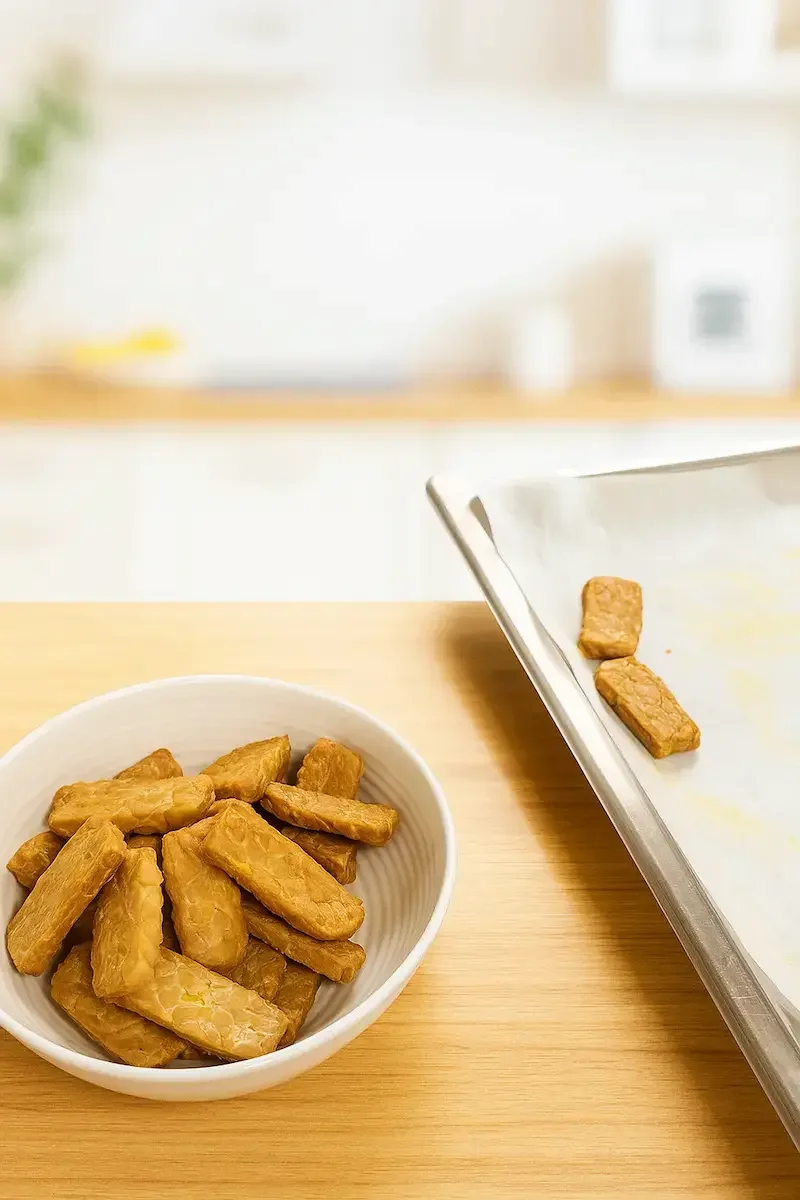
Tempeh chips are one of my favourite ways to add fermented soy into your diet. They’re quick to prepare and easy to make ahead of time, so you can soak them in the brine for a few hours, or even a few days, and then bake or air fry when you’re ready.
They’re perfect for an after-work snack, a lunchbox filler, or as a simple side with dinner. The texture is soft enough for children to hold and eat, while still giving that satisfying crunch. I love serving them with pumpkin hummus or sunflower seed pesto for an extra boost of flavour and phytonutrients that support hormone health.
Tempeh Chips
Serves: 1-2
Makes: 10-20 chips
Ingredients:
200 g tempeh (about 1 block)
2 tbsp fine sea salt
½ tsp turmeric powder
1 tsp curry powder
Olive oil spray
Method:
Slice tempeh into chip-sized rectangles or wedges.
In a bowl or container, fill with water and add enough salt until it tastes like the ocean. Add turmeric and curry powder.
Add the tempeh pieces, then let them soak for at least 3 hours, or up to 3 days in the fridge.
When you’re ready to cook, drain the brine and preheat your oven or air fryer to 180°C.
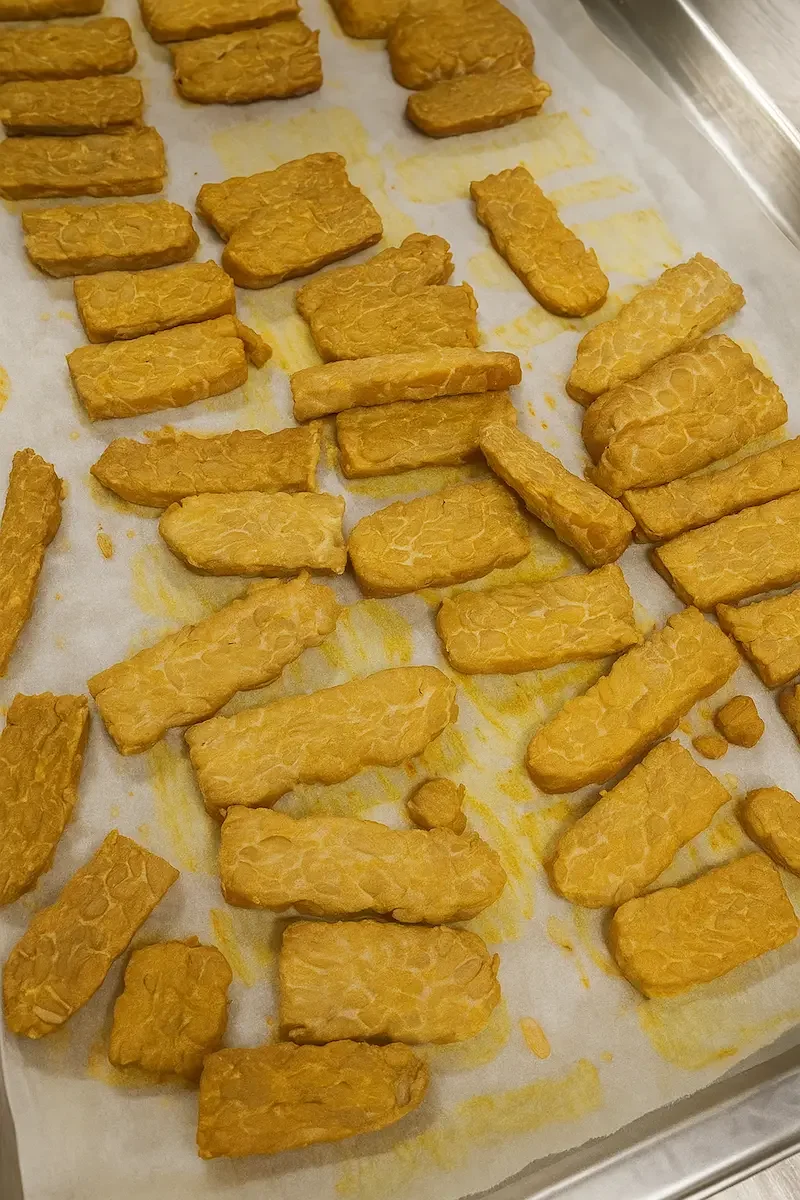
Line a tray with baking paper, spread the tempeh chips out, and spray lightly with olive oil.
Bake or air fry for 510-15 minutes, flipping halfway, until they’re golden and crisp on all sides.
Serve warm with your favourite dip or alongside a meal.
How to Incorporate More Hormone-Supportive Foods
If you’re working on balancing your hormones naturally, adding in fermented foods like tempeh is a great place to start. I often recommend including a variety of plant-based proteins, phytoestrogens, and prebiotic fibres to support the gut-hormone connection.
If you’d like personalised nutrition guidance, book a consultation and we can create a meal plan tailored to your goals. You can also explore more of my hormone-friendly recipes:
Each recipe is designed to nourish your body, support your cycle, and help you feel your best through food.
References
Baker, J. M., Al-Nakkash, L., & Herbst-Kralovetz, M. M. (2017). Estrogen–gut microbiome axis: Physiological and clinical implications. Maturitas, 103, 45–53. https://doi.org/10.1016/j.maturitas.2017.06.025
Frankenfeld, C. L., Atkinson, C., Thomas, W. K., & Lampe, J. W. (2014). High variability in isoflavone metabolism after soy consumption is linked to gut microbiota. Journal of Nutrition, 144(11), 1691–1699. https://doi.org/10.3945/jn.114.197012
Messina, M. (2016). Soy and health update: Evaluation of the clinical and epidemiologic literature. Nutrients, 8(12), 754. https://doi.org/10.3390/nu8120754
Reale, A., Di Renzo, T., & Coppola, R. (2018). The beneficial effects of fermented soy products on human health. Foods, 7(4), 94. https://doi.org/10.3390/foods7040094
Taku, K., Melby, M. K., Kurzer, M. S., Mizuno, S., & Watanabe, S. (2012). Soy isoflavones for postmenopausal women: Effects on menopausal symptoms and cardiovascular disease risk factors. Journal of Nutrition, 142(12), 2090S–2098S. https://doi.org/10.3945/jn.112.163147
© 2026 Feminalysis. All rights reserved. No part of this recipe may be reproduced without written permission.