
Healthy Raspberry Coconut Slice with Chia Seeds
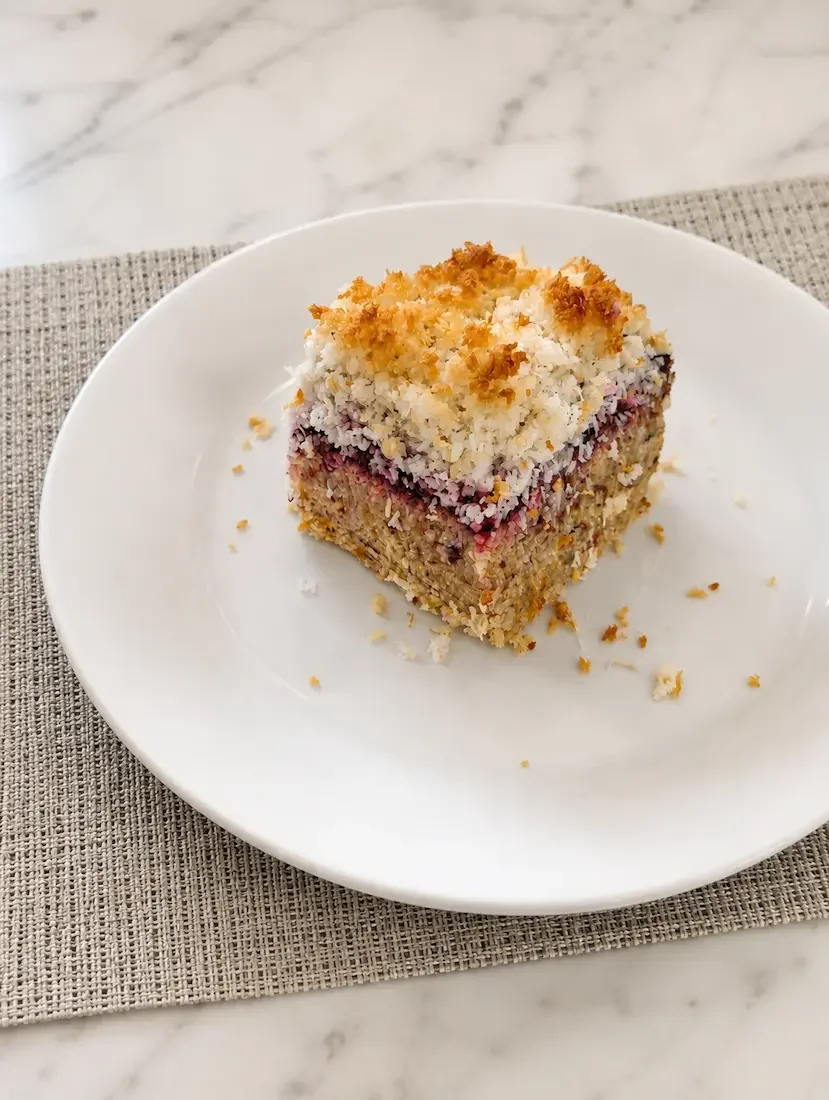
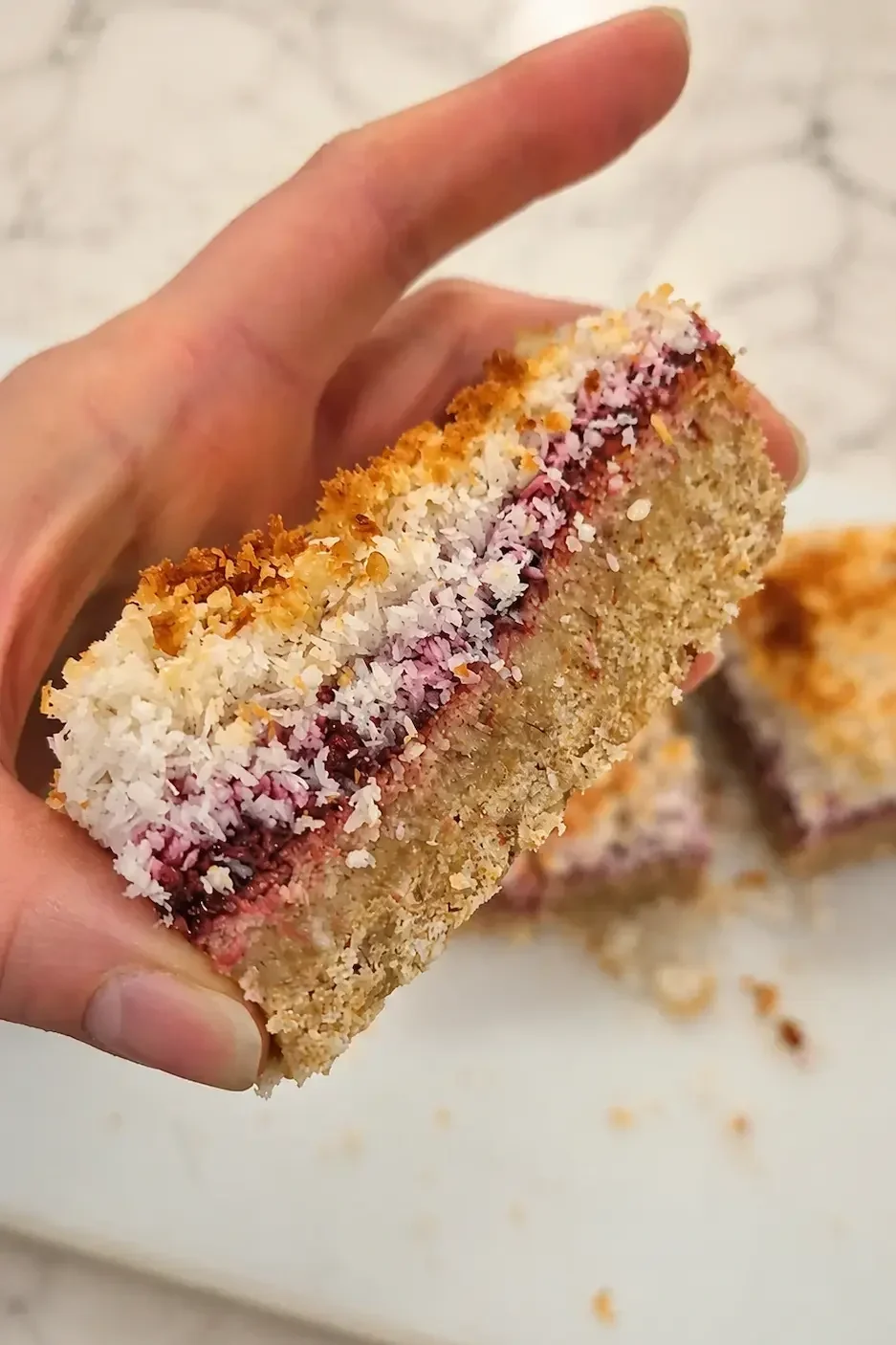
This healthy raspberry coconut slice has a soft almond and flaxseed base, a tart raspberry chia layer and a golden coconut topping filled with hemp and pumpkin seeds.
It is naturally gluten-free and dairy-free, provided you check the labels of your ingredients, and it freezes beautifully for easy snacks throughout the week. It is also a great option for children’s lunchboxes, although you will need to check your school or childcare centre’s nut policy because it contains almond meal.
While this is still a sweet slice containing honey, the almond meal, ground flaxseeds, chia seeds, coconut and other seeds provide fibre, fats and some protein. These ingredients help create a more substantial and satisfying snack than a traditional slice made mainly with refined flour, sugar and jam.
Honey is still an added sugar, so portion size and your overall eating pattern remain relevant. For a more balanced snack, enjoy a small square with Greek yoghurt, high-protein yoghurt or another protein-rich food.
A More Satisfying Sweet Snack
The combination of fibre, fat and protein in this raspberry coconut slice can help slow digestion and delay the rate at which glucose enters the bloodstream.
This does not mean you need to avoid sugar completely. Honey is still an added sugar, but combining it with almond meal, seeds and coconut creates a more satisfying snack that is less likely to leave you hungry again shortly afterwards.
For an even more balanced snack, enjoy a small square with Greek yoghurt, high-protein yoghurt or another protein-rich food.
Blood Sugar, Insulin Resistance and PCOS or PMOS
Polycystic ovary syndrome, or PCOS, was renamed polyendocrine metabolic ovarian syndrome, or PMOS, in 2026 to better reflect that it is a long-term hormonal and metabolic condition rather than simply an issue involving ovarian cysts (Teede et al., 2026).
Insulin resistance is commonly involved in PCOS or PMOS. When the body becomes less responsive to insulin, it needs to produce more insulin to manage blood glucose. Higher insulin levels can influence androgen production and may contribute to concerns such as irregular cycles, acne and difficulty managing weight.
Maintaining steadier blood sugar throughout the day can help reduce repeated large insulin responses and support improved insulin sensitivity over time. Research has found that lower-glycaemic dietary patterns can improve fasting insulin and measures of insulin resistance in women with PCOS (Kazemi et al., 2021).
One raspberry coconut slice will not treat PCOS or PMOS on its own. However, regularly choosing meals and snacks that combine carbohydrates with fibre, protein and fats can form part of a long-term nutrition strategy for improving blood sugar regulation and managing symptoms.
For more structured meal ideas, my 2-Week PCOS Meal Plan includes a complete 14-day plan, shopping list and recipes designed to support insulin balance and hormone health.
Why Grind the Flaxseeds?
Flaxseeds have a hard outer coating that can allow whole seeds to pass through the digestive system without being fully broken down.
Grinding the flaxseeds before adding them to the slice breaks open this outer coating and improves access to nutrients such as alpha-linolenic acid, or ALA, and lignans. Human studies have found that milled flaxseed provides greater bioavailability of ALA and enterolignans than whole flaxseed (Austria et al., 2008; Kuijsten et al., 2005).
Blending the flaxseeds with the almond meal and coconut also creates a finer, more cohesive base that holds together well once chilled.
Flaxseeds and pumpkin seeds are commonly included in seed cycling. You can learn more in my free Seed Cycling for Hormone Health guide.
Raspberry Coconut Slice
Makes: 16 small squares
Preparation time: 20 minutes
Cooking time: 20-30 minutes
Tin: 20 cm square baking tin
Almond and Flaxseed Base
100 ml coconut oil, melted
90 g honey
100 g almond meal
50 g whole flaxseeds
120 g desiccated coconut
1 egg
1 teaspoon vanilla extract
¼ teaspoon salt
Raspberry Chia Layer
200 g frozen raspberries
1½ tablespoons chia seeds
Finely grated zest of ½ lemon
Coconut Seed Topping
120 g desiccated coconut
1 egg white
2 tablespoons honey
1 tablespoon hemp seeds
1 tablespoon pumpkin seeds
Method
Preheat the oven to 170°C fan forced or 180°C conventional.
Lightly grease a 20 cm square silicone baking tin. If using a metal or cake tin, line the base and sides with baking paper.
Place the almond meal, flaxseeds and desiccated coconut into a high-powered blender or food processor. Blend until the flaxseeds have broken down and the mixture resembles a coarse flour.
Add the melted coconut oil, honey, egg, vanilla and salt to the blender.
Blend until the mixture comes together and develops a thick cookie dough texture. Stop and scrape down the sides as needed.
Transfer the base mixture to the prepared tin and press it down firmly and evenly using clean hands or the back of a spoon.
Bake the base for 10 to 15 minutes, or until it is lightly golden around the edges and beginning to set.
While the base is baking, place the frozen raspberries, chia seeds and lemon zest into a clean blender or food processor.
Blend until the raspberries have broken down and the chia seeds are evenly distributed. Leave the mixture to stand for approximately 5 minutes so it can begin to thicken.
To make the topping, place the desiccated coconut, egg white, honey, hemp seeds and pumpkin seeds into a bowl.
Use clean hands to rub and mix the ingredients together until the coconut is evenly coated and small crumble-like clumps begin to form.
Remove the base from the oven and carefully spread the raspberry chia mixture evenly over the top.
Sprinkle the coconut mixture loosely over the raspberry layer. Do not press it firmly into the raspberries.
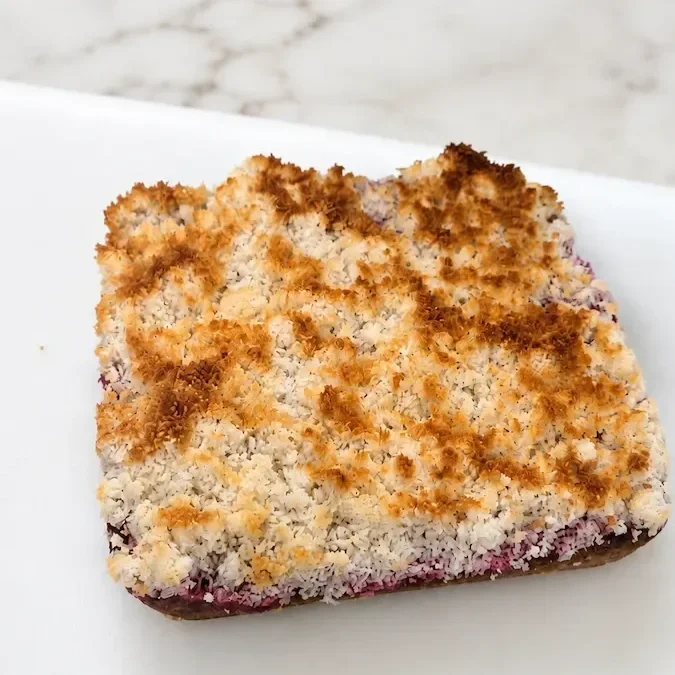
Return the slice to the oven and bake for approximately 10 to 15 minutes, or until the coconut topping is golden brown.
Check the slice regularly towards the end of cooking because coconut can brown quickly. Loosely cover the tin with foil if the topping is colouring too quickly.
Allow the slice to cool completely in the tin before refrigerating it for at least 1 hour. Chilling allows the raspberry chia layer and coconut oil to set properly.
Lift the slice from the tin and cut it into 16 small squares.
Storage and Freezing
Store the raspberry coconut slice in an airtight container in the refrigerator for up to five days.
To freeze, place baking paper between the individual squares and store them in an airtight freezer-safe container for up to two months.
You can transfer a frozen piece to the refrigerator the night before, or place it directly into an insulated lunchbox with an ice brick. It should gradually thaw by morning tea or lunchtime.
Because the slice contains almond meal and eggs, always check your child’s school or childcare allergy policy before packing it.
Recipe Substitutions
Can I use fresh raspberries?
Yes. Replace the frozen raspberries with the same weight of fresh raspberries. The layer may be slightly softer depending on how juicy the berries are.
Can I replace the honey with maple syrup?
Yes. You can use regular maple syrup or a sugar-free maple-flavoured syrup in place of the honey.
Regular maple syrup is thinner than honey, so the base and topping may be slightly softer. Allowing the slice to chill fully before cutting will help it hold together.
Some sugar-free syrups contain sugar alcohols, also known as polyols, such as sorbitol, maltitol or xylitol. These ingredients are not completely absorbed in the small intestine and can be fermented by gut bacteria. Larger amounts may cause bloating, gas or loose stools in people who are sensitive to them (Lenhart & Chey, 2017).
This does not mean sugar-free sweeteners are automatically bad for your gut. Individual tolerance and the specific ingredients used are important, so check the product label and notice how your digestive system responds.
If you experience regular bloating, constipation, diarrhoea or other digestive symptoms, you can enquire about my 12-week Gut Reset Intensive for personalised gut and hormone support.
Is this raspberry coconut slice sugar-free?
The original recipe is not sugar-free because it contains honey. You can reduce the added sugar by choosing an appropriate sugar-free maple syrup, although the flavour and texture may change slightly.
Is this recipe gluten-free?
The ingredients are naturally gluten-free. When preparing the slice for someone with coeliac disease, check that all packaged ingredients are certified gluten-free and protected from cross-contamination.
Making Sweet Foods Work for PCOS and PMOS
Long-term PCOS or PMOS management is not about avoiding every sweet food forever. That approach is rarely realistic or sustainable.
Instead, it can help to think about what you can add to a sweet food to make it more filling and supportive of stable blood sugar. Fibre-rich seeds, nuts, protein and fats can slow digestion and help you stay satisfied for longer.
This might mean adding chia seeds to a raspberry layer, using almond meal and flaxseed instead of refined flour, or pairing a sweet snack with yoghurt rather than eating it on an empty stomach.
These small, repeatable choices are often more valuable for long-term hormone and metabolic health than following a highly restrictive diet for a short period.
If you need individual guidance with PCOS, PMOS, insulin resistance, cravings or irregular cycles, you can explore my women’s health nutrition consultations.
References
Austria, J. A., Richard, M. N., Chahine, M. N., Edel, A. L., Malcolmson, L. J., Dupasquier, C. M. C., & Pierce, G. N. (2008). Bioavailability of alpha-linolenic acid in subjects after ingestion of three different forms of flaxseed. Journal of the American College of Nutrition, 27(2), 214–221. https://doi.org/10.1080/07315724.2008.10719693
Kazemi, M., Hadi, A., Pierson, R. A., Lujan, M. E., Zello, G. A., & Chilibeck, P. D. (2021). Effects of dietary glycemic index and glycemic load on cardiometabolic and reproductive profiles in women with polycystic ovary syndrome: A systematic review and meta-analysis of randomized controlled trials. Advances in Nutrition, 12(1), 161–178. https://doi.org/10.1093/advances/nmaa092
Kuijsten, A., Arts, I. C. W., van’t Veer, P., & Hollman, P. C. H. (2005). The relative bioavailability of enterolignans in humans is enhanced by milling and crushing of flaxseed. The Journal of Nutrition, 135(12), 2812–2816. https://doi.org/10.1093/jn/135.12.2812
Lenhart, A., & Chey, W. D. (2017). A systematic review of the effects of polyols on gastrointestinal health and irritable bowel syndrome. Advances in Nutrition, 8(4), 587–596. https://doi.org/10.3945/an.117.015560
Teede, H. J., Khomami, M. B., Morman, R., et al. (2026). Polyendocrine metabolic ovarian syndrome, the new name for polycystic ovary syndrome: A multistep global consensus process. The Lancet, 407(10545), 2329–2339. https://doi.org/10.1016/S0140-6736(26)00717-8
© 2026 Feminalysis. All rights reserved. No part of this recipe may be reproduced without written permission.